

Your Industrial Emergency Response Plan (ERP) is key to protecting your manufacturing facility and everything inside, from personnel to equipment and inventory.
OSHA’s standards cover the necessary elements of a compliant ERP, including evacuation procedures, employee training, and designating responsible communication leaders. Beyond those basic requirements, there’s one more key element of the best emergency response plans: adaptability.
A static set of emergency protocols that your company records once and sits gathering dust in a paper binder simply can’t keep up with the rapidly developing operations of a manufacturing plant. They must be revisited and updated every time you make changes at your facility, such as:
- Adding new production equipment
- Incorporating different materials into your lines
- Bringing on new employees or contractors
Without a system in place to continuously test and update your Industrial Emergency Response Plan, changes in operations like those above can open up safety gaps that your business isn’t aware of. Those gaps will eventually be tested in real emergencies, when failure can have significant consequences for both operations and lives. Evaluate the following elements of your current response plan to ensure they remain up-to-date and avoid being caught off guard when it matters.
Risk Assessment
Risk assessment is the foundational step of any Industrial ERP and must occur both before drafting an initial plan and before implementing any scheduled operational changes. The assessment ensures you’ve considered whether your existing emergency procedures encompass 100 percent of the potential risks in your facility, or if your Emergency Response Plan needs to be adjusted once the change is implemented.
Follow these key steps each time you update your emergency procedures:
Vulnerability Assessment: Think about each potential hazard (e.g., fire, chemical spill, intrusion) and how those events could affect assets inside your facility: employees, equipment, inventory, and production interruptions. If you are adding employees or equipment, will they be more vulnerable to certain risks based on their location or the materials they handle?
Impact Analysis: Scope the actual, numerical impact that those hazards could have on each asset. How would a flammable chemical spill in your warehouse affect inventory, and what mitigation measures are in place to prevent damage and personnel injury?
Ranking: Based on the combination of your vulnerability assessments and impact analysis, rank your potential hazards according to their likelihood and potential for damage. Ensure your Emergency Response Plan accounts for all these potential dangers and includes protocols for minimizing impact whenever possible.
Regular Review: Your team should conduct regular safety inspections and drills to identify potential oversights or protocols that don’t work in practice for emergency events. Assessment documentation should also include near-miss reports: what were the reasons behind the near-miss, and how could they be prevented in the future? Taking advantage of this real-time data will help bring your response plan from a mere hypothetical to a tried and tested one.
Comprehensive Emergency Notification System
In the case of an on-site emergency, does your notification system reflect the complexity and layout of your facility?
Relying on a paper sign-in sheet and the call trees of the past simply cannot provide the response speed or comprehensive alert system required to adequately protect everyone in your building. Do you have a reliable method for locating and contacting all individuals on the floor, including contractors, vendors, and visiting employees who may not be listed in your standard directory?
Relying on just one channel (such as a phone call or loudspeaker) makes you liable to miss people, like workers in safe zones without their mobile phones, or employees in loud areas who cannot hear PA announcements. A comprehensive Industrial Emergency Response Plan necessitates a multifaceted approach to promptly notify all individuals within your facility when an emergency occurs — not just later on.
Pro-Tip: Include non-employees in your test drills by having team members “act” as individuals that aren’t typically included in your response protocols. These people may not have an assigned RFID badge or have only provided contact information in a paper logbook. Could you locate and contact those prospective individuals in the event of an actual emergency?
Dynamic Evacuation Procedures
Your evacuation procedures should be flexible enough to handle the different types of emergencies identified during risk assessments. Consider if a fire necessitates different evacuation paths than a hazardous chemical spill or a security threat. Will a single-building or campus-wide evacuation be required to keep personnel safe, or would a shelter-in-place order be the best fit?
Beyond comprehensive hazard assessment, proper evacuation procedures must include:
- Up-to-Date Maps: Keep a thorough inventory of facility maps and signage. Any change—in machinery, facility layout, or new construction—must immediately necessitate updates to both physical signage and digital maps.
- Accurate Headcounts: Manual tracking of individuals inside your facility introduces human error. Suppose employees and visitors forget to sign out of a logbook. In that case, you risk missing individuals in your headcount totals or wasting critical time trying to track down someone who has already left the premises. Digital visitor management systems eliminate this risk by providing real-time, accurate roll calls.
- Clear Responsibility: Roles during evacuation procedures should be clearly defined, documented, and communicated to all employees to ensure a smooth and effective evacuation process. From those responsible for leading roll calls to sealing off hazardous areas or shutting down equipment before evacuation, everyone in your facility should know the exact steps they need to take in an emergency—and what to expect from other employees. Every time an employee leaves or is hired, review this responsibility documentation and update it if necessary.
Clear Communication and Training for Non-Employees
Typically, only employees participate in industrial safety drills and emergency tabletop exercises. That means that non-employees, such as contractors and facility visitors, do not have the same level of insight or experience with safety and evacuation protocols. Failing to consider that these individuals could also be inside your facility when emergencies occur creates a critical gap in your preparedness plan.
Ask yourself: Would a contractor performing maintenance know who to call to report a chemical spill, be able to locate the nearest fire extinguisher, or be aware of which evacuation area they should report to?
Untrained individuals may take unsafe routes, interfere with evacuation procedures, and delay your well-practiced emergency protocols. You must inform all non-employees of your emergency procedures when they enter your facility and ensure they are notified of any updates or changes since their last visit. It’s also crucial to keep any safety signage and evacuation maps up to date so that guests can easily understand the steps they need to take in an emergency.
Digital Documentation and Review
If you have more than ten employees, OSHA requires a documented Industrial Emergency Response Plan. Sheets of paper stored in a binder are prone to damage and loss, and updating them frequently is a hassle. A digital system can store your ERP as a single source of truth, ensuring updates are documented and communicated as they occur. Digital storage helps your facility:
- Maintain Consistency: If you operate multiple facilities, are you certain that every single location has the most up-to-date protocols posted?
- Define Responsibility: Staff turnover can disrupt your emergency chain of command and lead to devastating delays when speed matters most. A digital accountability chart with current contact information helps ensure that every employee is aware of their roles and responsibilities.
- Scale Without Risk: Technology can take on the burden of keeping your emergency preparedness plan current. You only need to update your digital ERP plan once, and you can seamlessly push those changes out to all employees and locations automatically, including the information you provide to guests and contractors when they enter your facility.
Ultimately, everyone inside your facility, whether they work for your company or not, is your responsibility in the event of an emergency. Creating your industrial emergency preparedness plan isn’t a one-time effort—it’s an ongoing responsibility that requires constant reassessment and an integrated, digital system to protect your people and your business.
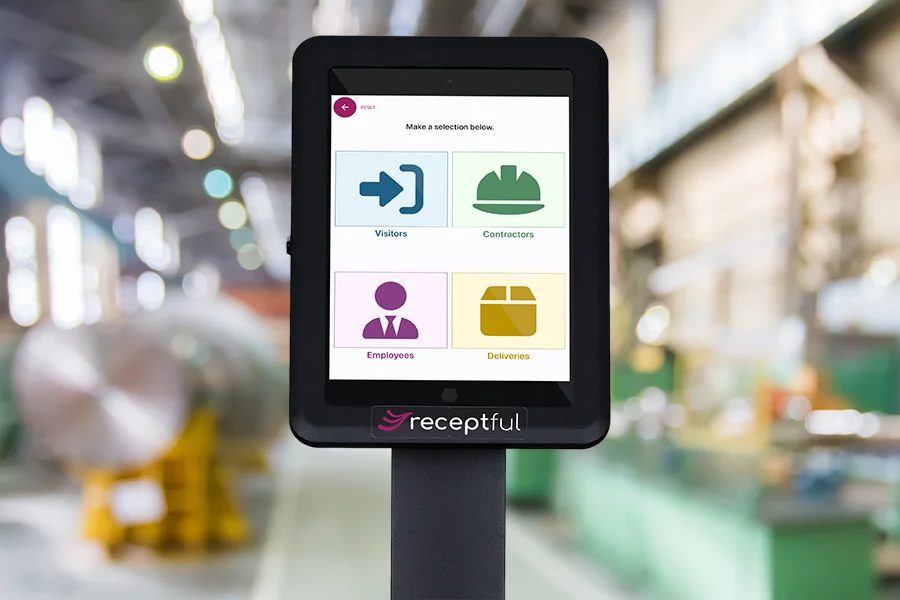
Interested in building a digital system that protects every individual inside your facility?
Take a self-guided tour of Receptful and discover how our digital check-in platform helps you confidently track every individual inside your facilities in real time—from visitors, employees, contractors, and delivery drivers. Instead of wasting time rifling through logbooks and deciphering phone numbers, our software will help you locate and contact individuals with just a few clicks—learn more now!