
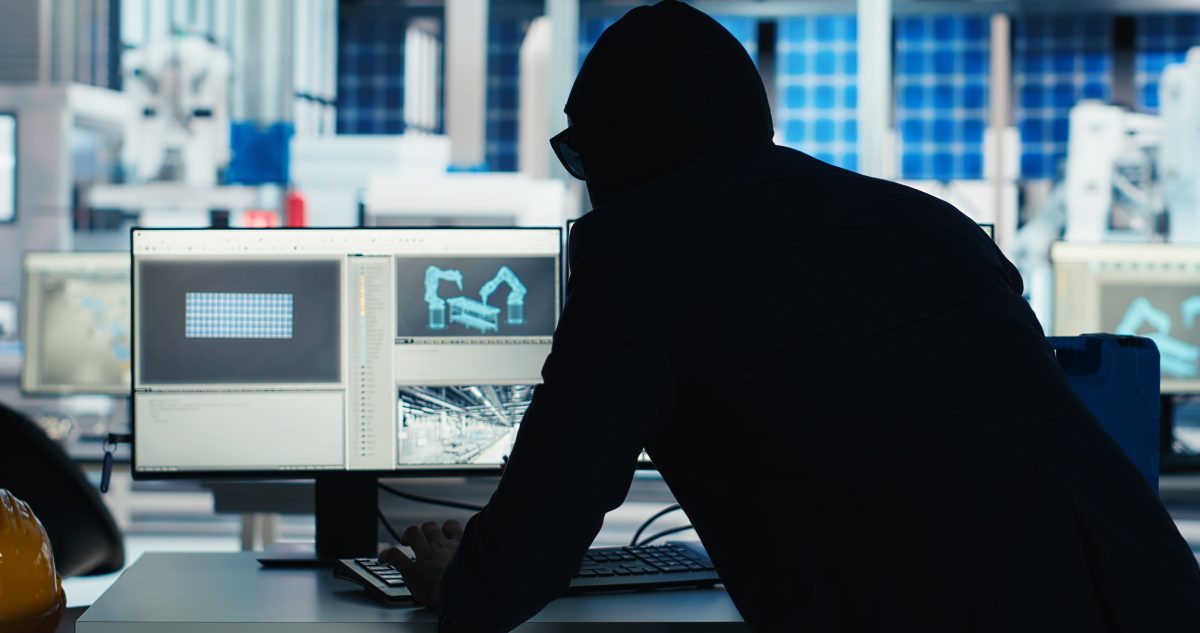
Manufacturing companies work tirelessly to shave seconds off production times, prevent downtime, and plan for risks that threaten their operations. However, there is one particular risk that can be difficult to accurately predict and prepare for: people. Whether they intend to steal materials, sabotage lines, or are simply careless and poorly trained employees, bad actors pose a serious threat to continuity, life safety, and profit in your manufacturing facility.
With warehouses and production floors full of metals, restricted chemicals, electronic equipment, and tools, manufacturing facilities and warehouses have always been attractive targets for criminal rings and after-hours theft. However, thinking of bad actors as only the masked strangers breaking into your facility under the cover of darkness overlooks the much wider range of threats your facility faces. Most of the time, industrial bad actors will walk through the same front doors as everyone else.
When manufacturing facilities rely on outdated and manual check-in practices, inconsistent identity checks, or assumptions that “everyone knows each other,” they create significant gaps that can allow serious threats to slip through. Here are some of the main categories of bad actors that you need to factor into your security protocols:
External Bad Actors
While traditional physical theft and external bad actors may not necessarily be the most prevalent threat your facility faces, they still pose a significant danger to your inventory. As security systems have evolved to thwart them, their methods are also becoming increasingly sophisticated.
These individuals often attempt to blend in by posing as contractors, following employees through unsecured entry points, or approaching docks during busy periods. In one case documented by the FBI, a criminal group executed a high-value pharmaceutical warehouse theft by exploiting lapses in identity verification and access control, demonstrating how quickly a determined intruder can defeat outdated security practices.
Some external actors aren’t motivated by financial gain at all. Competitors sometimes pursue information covertly—posing as job applicants, “consultants,” or temporary contractors—to gather data on processes, formulas, or equipment. Even a few minutes inside a restricted area can provide insights that undermine a competitive advantage, which means your facility needs to adhere to strict identity verification procedures to ensure that everyone inside the building is who they claim to be.
Internal Bad Actors
While security policies often focus on external threats and covert theft, internal personnel (people who are authorized to be on production floors, like employees, contractors, and vendors) have the potential to cause the most damage. They are more likely to be familiar with your facility and any potential security gaps. And because they have been initially approved to enter your building, their risky or malicious behavior won’t trigger alarms until it’s too late.
The most dangerous internal actor is often the disgruntled employee. Their motivations vary—disciplinary action, disagreement with leadership, personal stress—but the outcome is the same: retaliatory behavior that puts people and equipment at risk. That may appear to be bypassing SOPs, disabling safety interlocks, granting unauthorized personnel access, or intentionally damaging equipment. Because they already understand your processes, their actions are more difficult to detect.
Another frequently underestimated risk category is the careless or untrained employee. These individuals can unintentionally create the same conditions as a malicious actor by taking shortcuts or misunderstanding procedures. Many incidents begin with a simple risk behavior: a propped-open exit, an unattended and hazardous machine, or a badge left unattended on a desk. In tightly controlled workplaces full of hazardous materials and equipment, an innocent mistake can balloon rapidly into a highly damaging and costly situation in minutes.
While your employees undergo the most strict vetting and training processes of anyone on your floor, insider theft is unfortunately a significant (and rising) threat for manufacturing businesses. It could look like individuals stealing tools, PPE or chemicals in small amounts to avoid detection, or it could be several employees acting as part of a larger group to move significant quantities of valuable parts — like a Ford employee recently busted for operating as a part of a theft ring and stealing millions of dollar of auto parts right off the line over the course of four years. As the individuals with the most access to sensitive data or protected company IP, employees also pose a risk for sale of trade secrets and confidential manufacturing plans, threatening not just your company’s operations, but its long-term market position.
Contractors and temporary workers also pose a significant risk to operations. They do not have the same thorough security or safety training as your staff personnel. Many plants also have limited visibility into these workers’ histories, which means they pose a higher risk by default. A contractor taking photos of high-voltage panels could be documenting a job—or collecting sensitive information they shouldn’t have a record of.
Internal actors aren’t always malicious. But whether intentional or accidental, their actions could have significant consequences for your facility and your bottom line.
Supply Chain Risks
Manufacturing facilities deal with a constant rotation of freight drivers and outside partners dropping off materials or picking up product, many of whom your team has never seen before. Bad actors take advantage of this.
False vendors and delivery drivers are a common threat to facilities. A fabricated company uniform, a fake bill of lading, or an unverified purchase order can allow an unauthorized person to bypass your security and enter active work zones. Once inside, they can steal, sabotage, or gather intelligence in minutes. A recent report by Supply Chain 24/7 highlighted the growing use of fake IDs in cargo theft to evade warehouse checkpoints and blend in with legitimate logistics activities.
There’s also the threat of intentional contamination or tampering within supply chain interactions, especially at facilities handling food, chemicals, or pharmaceuticals. A single compromised shipment can trigger recalls, regulatory investigations, shutdowns, and life-safety hazards.
Even when malicious intent isn’t present, supply chain chaos creates opportunities for accidental bad actors. A mislabeled chemical, an incorrectly handled shipment, or a contractor who doesn’t understand on-site hazards can create the same level of risk as someone planning a deliberate attack.
Digital Threats
As manufacturing facilities transition into the age of Industry 4.0 and continue to adopt IoT sensors, smart panels, and network-connected control systems, digital infiltration and malicious actors must be treated just as seriously as physical threats.
Ransomware attackers can trigger real-world events inside manufacturing facilities and target the physical systems that maintain stability in chemical and machinery environments, all without ever setting foot inside your building. OT ransomware attacks have led to real-world incidents in recent years, including the shutdown of HVAC systems without warning, monitoring system failure, and dangerous fluctuations in storage conditions. A 2025 Sophos report on the state of ransomware in manufacturing reveals that hacking groups specifically target manufacturing companies because digital disruptions can have immediate physical consequences on production floors, resulting in over half of the surveyed manufacturers paying ransoms in 2025.
Credential harvesters target badge systems, sensitive login information, and protected data and information stored in the cloud. If they capture an employee’s credentials, they may gain access to badge-controlled storage rooms, hazardous equipment, or digital panels that regulate temperature and pressure. While these kinds of bad actors may not be physically present at your front door, they must be considered a key part of your physical security protocols.
Protecting Your Manufacturing Facility from Bad Actors
Every bad actor—whether external, internal, supply chain-related, or digital—introduces unpredictable risk into an environment that relies on stability for continued operations and personnel safety.
To mitigate this risk, modern manufacturing security plans must include:
- Identity verification, so that no one can enter anonymously or under false names and badges.
- Access control and physical segmentation, preventing unauthorized movement into hazardous or proprietary areas.
- Continuous monitoring, especially in loading docks, chemical storage zones, and after-hours regions.
- Regular training to enable employees to recognize suspicious behavior and learn how risky shortcuts can turn into serious incidents.
- Clear emergency response workflows, particularly for chemical releases, intruder alerts, and security breaches.
Many manufacturing facilities still rely on outdated or manual processes, making it nearly impossible to exert 100% control over who enters their site and whether they are there for legitimate reasons. Manufacturing bad actors thrive on anonymity and slipping through the cracks. Digital check-in systems that enforce visitor identity verification and support real-time access control eliminate that possibility.
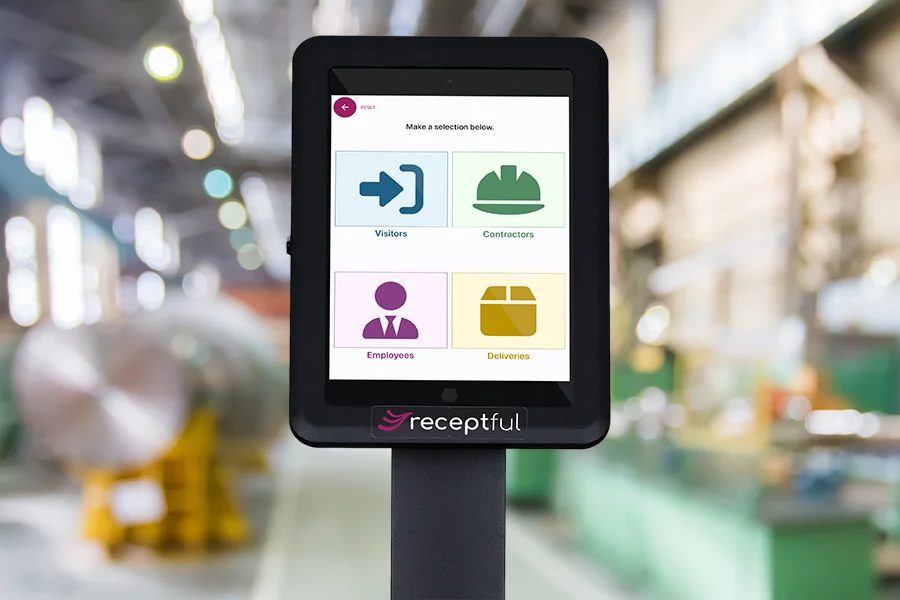
Want to learn more about building a digital system to help you verify and track activities within your facility?
Take a self-guided tour of Receptful and discover how our digital check-in platform helps you confidently track every individual inside your facilities in real time—from visitors, employees, contractors, and delivery drivers—so you can close security gaps before bad actors can exploit them.